
This is the second in our white paper series. Our first looked at the crisis of discovery, and the challenge of distribution.

“We tell ourselves stories in order to live,” wrote Joan Didion in the famous opening to The White Album, her landmark work of New Journalism. “At least we do for a while. I am talking here about a time when I began to doubt the premise of all the stories I had ever told myself, a common condition, but one I found troubling.”
A friend who works in wine distribution recounted a recent meeting where the team was deciding on which bottles to feature as pre-sell next year. “What wines should we offer?” was the question flummoxing the table.
One of the senior members of the staff spoke up, offhandedly, as if the answer was self-evident: “Well, I think it should be whatever is getting good press.”
Good press! We all had a good laugh about this statement, about how out of touch, how casual, and how presumptive it felt. Yet it so accurately encapsulates the wine industry’s current view of—and relationship with—wine media.
By “press,” they meant wine journalism or wine criticism published in a wine magazine. So, on the surface, it’s a quaint, old-fashioned notion that wine media still drives demand. Media in general is struggling—not a week goes by without reports of well-known publications shuttering, or scaling back, or laying off most of their staff, or transitioning to cheap, AI-driven content. By now, it’s such old news that it barely registers. But in the realm of wine media, it’s even more dire.
“Wine publications don’t move the needle,” a well-connected public-relations professional recently told us. “They don’t sell bottles. They don’t put seats in tasting rooms. They don’t add to the bottom line.” It’s a sentiment we’ve heard from all corners of the industry.
None of this is news. From Wine & Spirits to New Wine Review to Pix’s The Drop, the road behind us is littered with failed wine publications. Since before the retirement of Robert Parker in 2019, it’s been a talking point—now common wisdom within the industry—that the influence of the 100-point rating system is waning. “People don’t buy meaningfully because of a 100-point score,” our PR insider friend told us.
In our media dystopia, the idea of someone who sells wine saying, Well, we should promote whatever wines are getting “good press,” is ridiculous. But there’s something even more pervasive and disturbing about that statement, which sums up the industry’s troublesome relationship with wine media: It’s the idea that wine media simply exists as a service to the wine business. That wine media is something that endures for the industry to use passively—mostly for free—when it’s directly beneficial to them. And to ignore it, or actively try to undermine it, when the media message is more complicated or challenging.
Why does a failing wine media matter?
We’re sure that some of you reading this white paper are asking yourselves, “Why should I care if wine media ceases to exist?” It’s a fair question. Some of you may even be actively rooting for its demise. Given so much shady, grey-area, ethics-challenged, funny business in wine media—as Jason suggested in his widely-read 2022 piece “Wine Media Is Broken: A Case Study”—we do not blame you.

But here’s the thing: If you sell “wines of discovery,” have you found a better way of creating demand for your wines? Perhaps you have, and if that’s the case, we’d love to hear about it. But our guess is that it’s a continual struggle to find an audience for the sort of compelling, affordable bottles that lead to consumers’ better understanding of wine, and of their own tastes.
As we wrote last month in our first white paper, “The ‘Wine Crisis’ is a Crisis of Discovery”:
What wine faces right now is a crisis of discovery. How do you even begin to create demand for quality wines anymore? How do you introduce consumers to exciting new bottles? This crisis of discovery is affecting a lot of you reading this: those who work in small and mid-sized wineries, or with local importers or distributors, or for independent retailers, or in restaurants that still care about what’s on the wine list…
The only real, long-term solution to this crisis is to create a larger demand for wines of discovery. If we want to develop a critical mass of lifelong wine lovers, we need to introduce them to the bottles that will help them understand the rich tapestry of wine, with its plethora of styles, and grapes, and places. Most importantly, these potential wine lovers will learn their own personal tastes within the wide world of wine. That’s hard work to create a demand like this, with few shortcuts. We need more people in the industry committed to that work.
Once upon a time, wine media reliably helped create this sort of demand with so-called “high-end wine consumers” (defined as people who purchase one wine over $20 at least once a month). But over the past decade, for numerous reasons, wine media has faltered in its ability to create that demand.
Wines of discovery are sold by telling their stories. But in the current climate, those who sell these wines are too reliant on a crumbling media to tell those stories. And think about who we’re relying on: Mostly underpaid freelance writers, pitching to a shrinking pool of distracted editors, who are fielding pitches from dozens of other underpaid freelancers. It’s as desperate a situation as you can imagine.
And for those who have already given up on traditional wine media, they’re relying on social media influencers with fickle metrics, sommeliers-as-brand-ambassadors in constant fear of being laid off by their day job, or regional marketing organizations who pander to everyone, regardless of quality.
Anyone selling wines of discovery would be better served bypassing this broken system, taking control of their own messaging, creating their own content, and developing their own audience. The dilemma is that almost none of the traditional communication consultants are capable of executing a content play like this.

No, spending money on PR isn’t going to save you.
A curious thing that nobody talks about is the role that the industry’s public-relations apparatus has played in the demise of wine media. Consider the dynamic of PR agencies, which have been paid tens of thousands of dollars by their clients, pitching desperate freelance writers who might be making $300 to $500 on an article.
We hear endless grumbling from industry people about messaging and media, about reaching new audiences, about the lack of new ideas and strategies. And yet, they continue to spend money on the same broken model. Every week, as working freelance writers ourselves, we get dozens of emails from PR and brand people, pitching us on “new” products and services that feel like the same old thing, notifying us of the same old tastings to attend, inviting us on old-fashioned group press trips. These PR and brand people, presumably, are emailing in hopes that we will write about their products, services, tastings, and places.
Does this PR model net results? It seems odd to us that the PR agencies aren’t more worried about the shrinking opportunities for so-called “earned media” to report back to their clients. Even ten years ago, there were so many more outlets for wine content—men’s magazines, airline magazines, hotel magazines, niche food and travel magazines. Not anymore. Even general-interest media has less and less editorial space for wine content, and what they do run is so often uninformed and embarrassing.

Some days, as we are deleting these emails en masse, we wonder: For whom or where, exactly, do these PR firms hope that we’re writing about their pitches? Seriously, who? As we’ve already said: so much of wine media has gone out of business or downsized. And for what? Everyone knows that many of the remaining outlets often pay peanuts for content.
The myth of “$1 per word”
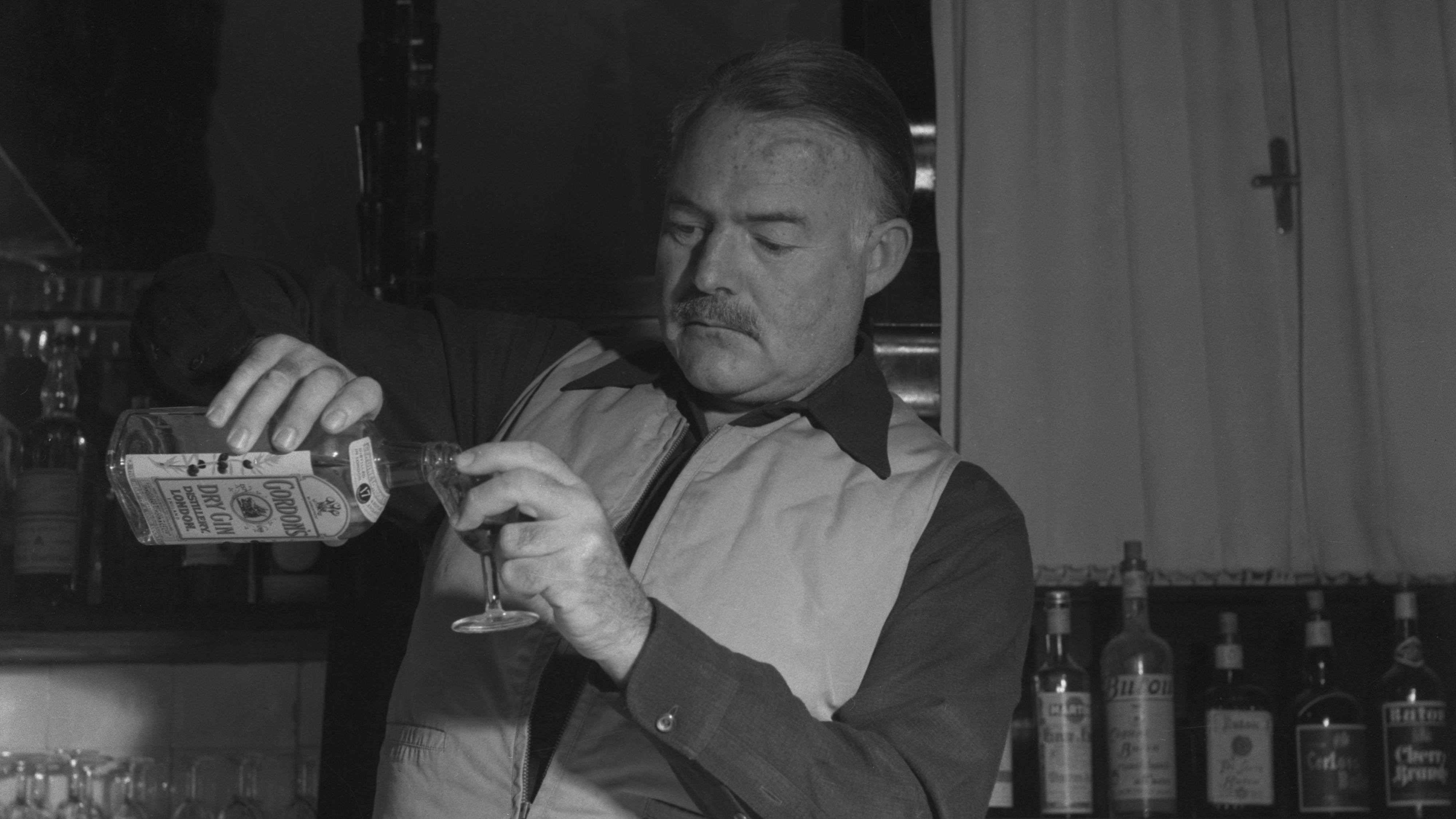
People outside journalism often don’t understand how little money that writers get paid for content. Across publishing, the basic rate for freelance writing at major outlets has stagnated at around $1 per word for almost a century (though many publications pay much less than $1 per word). Consider how long this “dollar per word” has been a standard. Ernest Hemingway, filing dispatches for magazines from the Spanish Civil War in 1936, was also paid $1 per word. That 1936 dollar is the equivalent of about $24 today. Even if they’re no Hemingway, that means today’s writers earn about four percent of the per-word rate that writers earned 90 years ago. What other industries have seen such a precipitous drop for their paid work?
And then there is the expense of traveling to wine regions, which very few publications factor into their rates. This is a taboo issue to raise in journalism—an open secret—as even most of the biggest publications do not cover travel expenses. Even as a salaried, full-time staff writer at New Wine Review, Jason had to cover most of his travel expenses to cover stories. When Jason was a critic at Vinous, he had to cover his own travel expenses of spending two weeks in the Loire Valley, visiting more than 40 wineries, and tasting hundreds of wines—expenses that were nearly as much as the fee paid for the article.
The issue of travel costs for a journalist to report wine stories always makes people uncomfortable, and many suggest that the “romance” of visiting a wine region should justify the lack of payment. But work is work, whether the travel is to an oil rig in the North Sea or an office building in Wilmington, Delaware—or to a beautiful wine estate in Tuscany. The local food critic doesn’t cover restaurants from his kitchen table. The Phillies baseball reporter doesn’t cover a road game from their couch in South Philly. A Vogue fashion writer doesn’t cover Paris fashion week from their apartment closet in Brooklyn. Travel is an essential part of wine coverage.
The result of this acceptance of no travel expenses in wine media creates a system where writers must rely more and more on organized group press trips, subsidized by brands or regional organizations. Or else they need to be independently wealthy.
Given all this, why would a low-paid freelance writer go out of their way to work with a PR firm? Think hard about the answer to that question—and the ethical dilemmas such a dynamic inevitably creates—and you’ll start to understand what’s fundamentally broken in wine media.
How did we get here?
The industry began to undermine and devalue wine media more than decade ago, around when the influential 2012 documentary, SOMM, was a surprise hit with the general public. At that time, there was a growing movement against point-scoring critics like Robert Parker—and the perceived “Parkerization” that led to a dominant so-called “international style” of oaky, fruit-bomb wines. At the same time, the natural wine movement was also creating a new narrative that traditional wine media—to its detriment— resisted embracing until it was too late.
This is when the center of influence and gatekeeping in the wine world shifted from writers to sommeliers. Somms at popular restaurants and wine bars usurped the critics’ voice of authority. A new era of credentialism took hold, and people started questioning whether one could legitimately speak or write on wine without a “proper” education and certification. This is ignorant of how journalism works, akin to asking a food critic whether they trained as a chef, or if a baseball reporter played in the big leagues, or if a fashion writer has graduated from Parsons School of Design.
In wine media, this was when you started seeing articles with headlines like: “We Asked 11 Sommeliers: What Sauvignon Blanc Offers the Best Value?” or “What Wines Pair Best With Fast Food, According to 7 Sommeliers.” Part of this was a way for magazines to bring down the costs of freelance writing. If all the bylined writer had to do was email seven certified sommeliers and then cut-and-paste their answers into a Google doc, how could they expect to be paid very much money for their work?
It also created a new strata of gatekeeper, which could be much more controlled by the industry. A critic like Robert Parker had certainly never passed any WSET exams—and kneecapping or excluding the next, independent Robert Parker was sort of the point.
But here’s the problem. Few foresaw the crisis that would befall this new class of sommelier gatekeeper. As we wrote about in our last white paper:
What’s exacerbating the distribution dilemma in restaurants and bars right now is an industry-wide elimination—or at least de-emphasis—of the sommelier position. Sommeliers have always been advocates for wines of discovery. But what happens now as hospitality gradually becomes post-sommelier?
This idea was first introduced in VinePair’s 2022 article titled “Where Have All the Sommeliers Gone?” which looked at how the sommelier position changed during COVID, when many restaurants sold off their wine collections for the cash necessary to survive. According to VinePair, “this shift from long-term to short-term thinking is one reason that sommeliers have dwindled.” In many cases, the sommelier position has been absorbed into the manager’s role, with that employee expected to squeeze in wine steward duties as part of their existing job.
In 2024, New York Times’ Eric Asimov suggested we are in “The Twilight of the American Sommelier,” saying that “many serious, wine-oriented restaurants are doing without. Instead, those positions once dedicated to wine are now often hybrids with servers, bartenders, or managers handling wine in addition to their other duties.”
So what to do now that we’re moving into a post-sommelier era? It seems impossible that traditional wine media can put the genie back in the bottle and reclaim the authority of the critic. So now what?
Whither the influencer?
It’s not 2016 anymore and the wineries who are still spending indiscriminately on influencer marketing are wasting their resources. Most wineries are still looking at old metrics like follower counts and average engagement rates which are retro-facing instead of forward-facing and predictive.
A Digiday article, entitled “From vibes to data: “Why some brands use predictive tech to vet creators,” deals with the repercussions of how quickly the influencer economy has grown and how brands can be smarter about influencer partnerships. “The market has exploded in the last decade, but without the traditional guardrails, metrics, and accountability you’d come to expect from a multi-billion-dollar industry.”
Our friend in PR confirmed that the vast and growing pool of wine-specific influencers have learned how to capitalize on this less-regulated sector of wine media: “The good ones know how to juice the numbers to look compelling. The numbers look impressive, versus some person that writes for Wine Enthusiast.”
Yet, at the end of the day, it seems to just be a matter of vibes, not results. “Wineries are working with influencers where they used to advertise with magazines. It feels hopeful in a way that traditional magazines don’t feel hopeful,” says our PR insider. Unfortunately, in the current creator climate, even the vibes are often off.
In surveys, consumers are becoming fatigued with overly polished content that is relentlessly selling to them. Creators, meanwhile, are burnt out and disillusioned as engagement rates hit all time lows. This doesn’t mean there isn’t an opportunity in the creator space. There absolutely is, but these partnerships cannot be based on hopefulness or vibes.

Wine is a topic that still demands the written word
Yeah, we know the common wisdom: People don’t read anymore; they watch videos. But when it comes to wine, that simply isn’t true. The people who buy wines of discovery actually read about wine. Just look at Everyday Drinking: two-thirds of our audience are consumers who don’t work in the industry.
On social media, wine content must overcome the fact that short-form video is simply not a sticky medium. It’s difficult to retain the complex level of wine information in the formats currently popular on platforms like Instagram.
We see the desire for the written word in the consumer wine classes we’ve taught for many years. As simple and fun as we want to keep things, anyone who talks about wine will inevitably have to use foreign words, unfamiliar terms, names of obscure grapes or lesser-known places, many with tricky pronunciations. We’ve found that consumers like to have something written in front them—a cheat sheet of relevant words, a list of the bottle names, possibly even a map. In the beginning, we thought people would just ignore the cheat sheets, and even prefaced them by joking, “Don’t worry, there won’t be a quiz later.” But now the people who attend our classes demand the written word.
Veering away from written wine content goes hand-in-hand with the problem of “demystification” that we talked about in the last white paper:
The widespread over-simplification has created a situation where, if someone tries to explain more than a few sentences about wine, it’s quickly dismissed as too “snobby.” This discouragement of productive communication is terrible for wine. After all, how else do people learn about anything they’re interested in—whether it’s baking or baseball or birding.
All this focus on demystification has come at the expense of wine’s core customer—of all ages— whose interest has never faltered. When the industry starts apologizing for wine’s depth, it strips away exactly what draws in real wine consumers. It’s an uncomfortable thing for many in the industry to accept, that the most knowledgeable and discerning wine drinkers—the people much too easily dismissed as “snobs”—are actually their best customers.
Those best customers read. And they read about wine.
Our solution: Newsletters are wine’s medium
As the rest of wine media collapses, the one medium that’s always worked for wine is the newsletter.
The most obvious example of this is The Wine Advocate, founded by Robert Parker in 1978. Regardless of your feelings on Parker, it behooves us all to remember that the most influential wine publication of the past half-century was The Wine Advocate. It helped spur the widespread, mainstream demand for quality wine at the end of the 20th century in a way little else did. We should also remember that it began as a print newsletter shipped by Parker from his home in Maryland.
By now, a lot of us have internalized the negative talk about “Parkerization,” Parker’s preference for high-alcohol, heavily-oaked, fruit bombs, and the outsized influence that he wielded on wine culture. But it can be shocking to remember what an outsider that Parker was in the beginning. The Wine Advocate’s (self-told) origin story is nothing if not revolutionary:
“In the early 1970s, when Parker was conceiving of writing his own wine guide, he was taken with the work of Ralph Nader, an American political activist who sought to ‘out’ corporate and political corruption by challenging compromised propaganda. Parker recognized that much of what was then being written about wine was compromised by the financial agendas of many of the famous wine writers of the day. He dreamt of a publication that could be free of financial ties to wineries and merchants, a guide that would produce wholly unbiased views on wines and that served only the interests of wine consumers. This would be a magazine that would be funded purely by subscribers—the people that buy, read and use it. And so, The Wine Advocate started and remains true to this day.”
While Parker was an independent voice, others on wine’s supply side used newsletters to create demand. Consider the newsletter started in 1972 by legendary importer Kermit Lynch, which has also been hugely influential in shaping American wine culture. Numerous importers, such as Neal Rosenthal or Terry Theise, and many great wine shops, such as Chambers Street Wine in New York have followed suit with much-read publications.
The beauty of a newsletter is that it comes from one informed voice, one writer or a small group of writers. This is not to say that newsletters are not edited—good ones always are. But the writer’s vision guides that process. There’s no invisible editor’s or publisher’s hand subtly manipulating the content, with all the potential conflicts and agendas that can arise. In a way, the newsletter writer works more like the low-intervention winemaker we all say we venerate.
So why doesn’t the wine industry invest in newsletters? Because of misperceptions mainly. Within traditional media—the media that is broken and struggling—newsletter are looked down upon as lesser media. The “newsletter” conjures up musty images from the 1980s and 1990s, an amateur publication printed on paper and stapled, designed using clip art and too many fonts, something sent out as a church or Little League bulletin, or from Karen in HR.
The newsletter in 2026 is a very different thing indeed.

Wine newsletters still work
A few weeks ago, Substack (the newsletter platform we use at Everday Drinking) created a Wine & Spirits category (yes, we are at the top of those rankings, by a lot).
At the same, we’ve been noticing a fascinating, under-the-radar media play: a steady stream of wine influencers have been coming from Instagram to start newsletters on Substack. Is it a coincidence, or do these influencers see the unique edge of the Substack newsletter—how it exists in a space between conventional publishing and social media? We’ve definitely also been noticing that most of the wine influencers flocking to Substack have a very small number of readers—their Instagram metrics don’t seem to be translating to the newsletter medium.
Last year, Substack raised $100 million in investment, and is now valued at over $1 billion. Other adjacent industries like fashion, food, and hospitality are already quickly adopting Substack and reinventing the newsletter. Wineries, importers, wine regions, and other suppliers might want to consider following suit.
The conclusion of our last white paper stands for this one, too:
Like it or not, wineries and importers must be able to tell a fresh story about their wines. Only those stakeholders are positioned to tell their story—not the way they think customers want to hear it, but the way it actually is. They must know who their wines are for (or at least be willing to find out) and speak directly to that audience. If they can’t do that themselves, they have to hire a partner who can.